Roses are among the most loved garden flowers, valued for their colorful blooms, fragrance, and variety of shapes and sizes. From compact miniature roses to climbing varieties that cover a trellis, there is a rose for many different garden styles.
Growing healthy roses does not have to be complicated. The most important steps are choosing a variety suited to your climate, planting it in a suitable location, maintaining healthy soil, watering appropriately, and learning how to recognize common pests and diseases.
This guide explains how to grow and care for roses, whether you are planting your first rose bush, improving an established flower bed, or growing roses in containers.
1. Understand the different types of roses
Before buying a rose plant, consider its mature size, flowering habit, fragrance, disease resistance, and maintenance requirements. The right choice depends on your available space and local growing conditions.
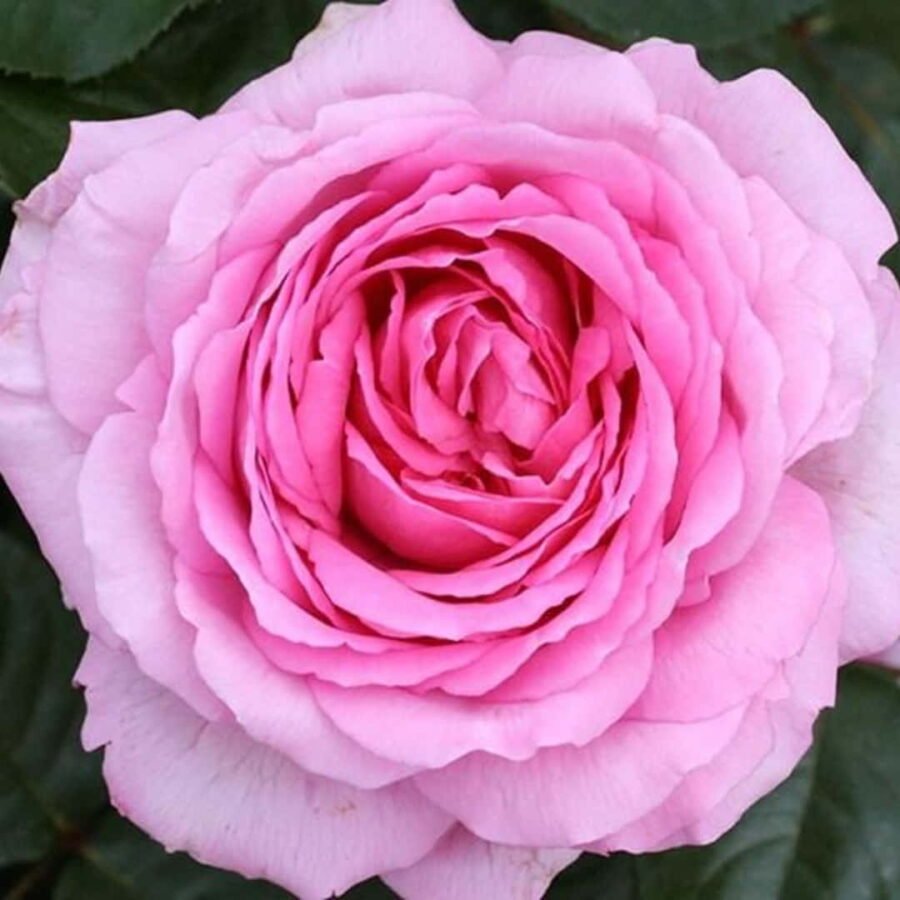
| Type of rose | Main characteristics | Best suited for |
|---|---|---|
| Hybrid tea roses | Often produce large, individually borne flowers on long stems | Cut flowers and formal beds |
| Floribunda roses | Commonly produce clusters of flowers | Colorful flower beds and borders |
| Shrub roses | Often bushy plants with varied growth habits | Mixed borders and larger gardens |
| Climbing roses | Develop long canes that can be trained onto supports | Trellises, fences, and walls |
| Rambling roses | Often produce vigorous, arching growth and abundant seasonal flowers | Large supports and spacious gardens |
| Miniature roses | Compact growth and smaller flowers | Containers, patios, and small spaces |
| Ground-cover roses | Usually spread across the soil surface | Suitable slopes and broad planting areas |
These categories describe general growth habits, and individual cultivars can differ considerably. Some shrub roses need little pruning, while others benefit from more shaping. Climbing and rambling roses also have different training and pruning requirements.
How to choose the best rose for your garden
Before purchasing a rose, ask yourself:
- Does the location receive enough direct sunlight?
- Will the mature plant fit the available space?
- Is the variety suited to your winter temperatures and summer heat?
- Does it have good resistance to common local rose diseases?
- Do you prefer fragrance, repeat flowering, large blooms, or low maintenance?
- Can you provide the support required by a climbing rose?
For beginners, a locally recommended, disease-resistant shrub rose can be a practical choice. In humid climates, prioritize varieties with good resistance to black spot and other locally common fungal diseases.
2. Choose the right location and sunlight
Most garden roses grow best in a sunny location with good air circulation and well-drained soil. However, light requirements and heat tolerance vary among cultivars and climates.
Look for a location that provides:
- Adequate direct sunlight: Many roses perform well with around six or more hours of direct sunlight, although check the requirements of your specific cultivar.
- Good air circulation: Leave enough space between plants to help foliage dry after rain or watering.
- Room for mature growth: Avoid planting roses where branches will be crowded against walls, paths, or neighboring shrubs.
- Suitable drainage: Avoid locations where water repeatedly pools around the roots.
- Protection from extreme conditions: In very hot climates, some varieties may benefit from protection from intense afternoon heat, provided they still receive sufficient light.
Growing roses in hot climates
In hot or dry regions, roses may experience rapid moisture loss, leaf scorch, or reduced flowering during heat waves. Select varieties recommended for your area, use mulch to protect the soil, and monitor moisture more frequently during hot weather.
Where summers are extremely hot, planting in a location with morning sunlight and some protection from the harshest afternoon heat may help suitable cultivars. Do not assume every rose needs shade, however; insufficient light can reduce flowering.
Growing roses in cooler climates
In colder regions, choose cultivars rated for your winter conditions. Planting and pruning schedules should follow local recommendations, because the best timing depends on frost risk, winter severity, and the type of rose.
3. Prepare the soil before planting
Roses generally prefer fertile soil that retains some moisture while draining excess water. Poor drainage can deprive roots of oxygen and contribute to root decline, while very sandy soil may dry out quickly.
How to prepare a rose bed
- Inspect the soil. Check whether it is sandy, heavy clay, compacted, or prone to standing water.
- Test the soil if needed. A soil test can identify pH or nutrient issues before you spend money on amendments.
- Improve soil structure. Incorporate suitable mature compost where appropriate, following local soil guidance.
- Address drainage problems. If water remains around the roots after rain, consider a raised bed or another suitable planting location.
- Remove persistent weeds. Clear the planting area so young roses do not have to compete for moisture and nutrients.
Do not automatically add lime, sulfur, or large amounts of fertilizer. These amendments should be based on soil conditions and the needs of the selected rose.
What soil pH is best for roses?
Many roses grow well in slightly acidic to near-neutral soil, but the ideal range can vary by growing conditions and reference source. Check your soil test results and the recommendations for your region before adjusting pH.
The key is to create a balanced root environment with appropriate drainage, adequate nutrients, and enough organic matter to support healthy growth.
4. When and how to plant roses
The best planting time depends on the rose’s form, local weather, and whether the plant is sold bare-root or in a container. Bare-root roses are commonly planted during dormancy, while container-grown roses may offer more flexibility when conditions are suitable. Avoid planting during extreme heat, frozen soil, or waterlogged conditions.
Step-by-step rose planting guide
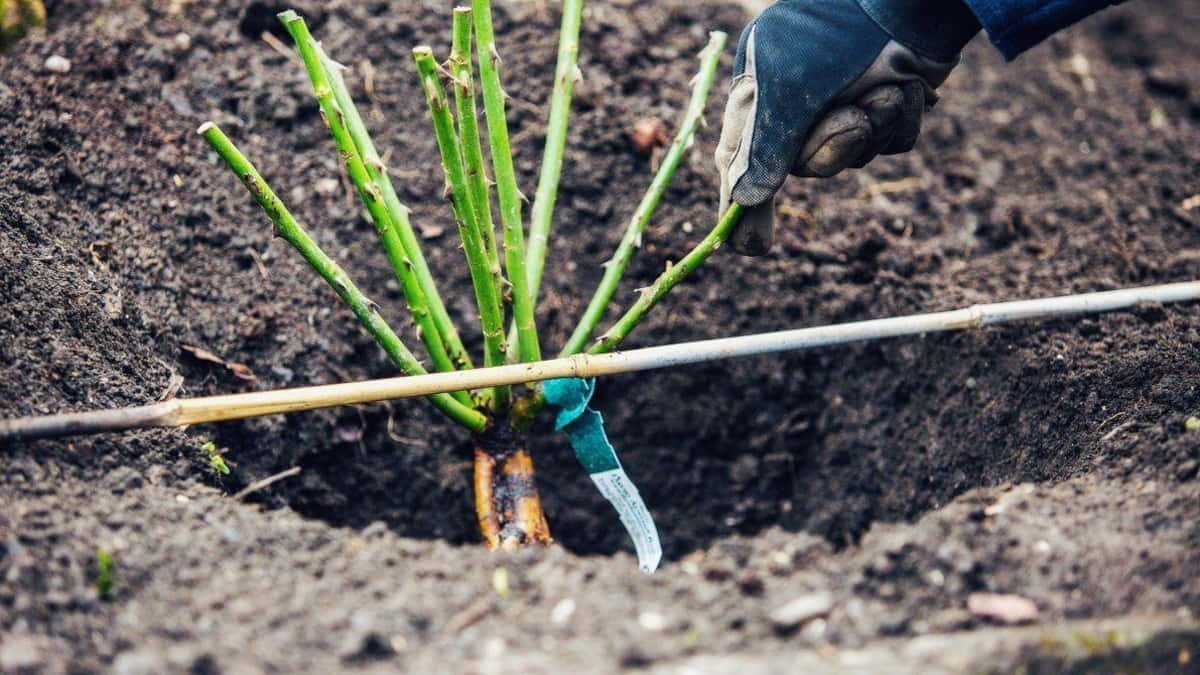
- Prepare the planting hole. Make it wide enough to accommodate the roots without bending or crowding them.
- Prepare the plant. Follow the nursery’s instructions for bare-root or container-grown roses. Handle roots carefully and remove damaged material where appropriate.
- Position the rose correctly. Plant at the depth recommended for that plant type and your climate. Grafted roses may require particular positioning based on local conditions.
- Backfill carefully. Use the prepared soil and gently firm it around the roots without compacting it excessively.
- Water thoroughly. This helps settle the soil around the roots.
- Add suitable mulch. Spread mulch over the surrounding soil, keeping it away from direct contact with the stems.
- Monitor establishment. Check soil moisture frequently while the rose develops new roots.
Follow the nursery’s planting instructions if they differ for a particular cultivar or rootstock. Avoid applying strong fertilizer directly against newly planted roots unless the product specifically permits it.
5. Water roses correctly
Watering needs depend on the rose variety, soil type, weather, plant age, and whether the rose grows in the ground or a container.
Newly planted roses need closer moisture monitoring while their roots establish. Established roses may require additional water during extended dry periods, particularly in sandy soil or hot weather. Container-grown roses generally need more frequent checks because their limited growing medium can dry out quickly.
Best practices for watering roses
- Check the soil before watering rather than relying on a rigid weekly schedule.
- Water slowly around the base of the plant so moisture reaches the root zone.
- Water deeply enough to moisten the relevant root area without leaving the soil waterlogged.
- Prefer morning watering when practical, particularly in humid conditions.
- Adjust watering after rainfall and during heat waves.
- Check containers more often than in-ground plants.
Avoid frequent, shallow watering when a deeper soak is appropriate. At the same time, do not let newly planted roses or container-grown plants dry out excessively.
How to recognize watering problems
| Symptom | Possible explanation | What to check |
|---|---|---|
| Wilting and dry soil | Insufficient water or rapid moisture loss | Soil moisture below the surface |
| Wilting and wet soil | Poor drainage or root damage | Drainage holes, soil condition, and root health |
| Brown leaf edges | Heat stress, moisture stress, or salt buildup | Weather, irrigation, and fertilizer use |
| Weak new growth | Root stress, unsuitable light, or nutrient problems | Planting conditions and recent care |
| Yellow leaves | Several possible causes, including natural aging, water stress, or disease | Leaf pattern, soil moisture, and other symptoms |
Do not assume every wilted rose needs more water. Adding water to an already saturated root zone can worsen the problem.
6. Fertilize roses responsibly
Roses need adequate nutrients to produce healthy foliage, strong stems, and flowers. However, fertilizer requirements vary by soil fertility, cultivar, climate, and whether the plant grows in a container or garden bed.
Start by improving basic growing conditions. If a rose is growing poorly, check its light, drainage, watering, and root health before assuming that it needs fertilizer.
Rose fertilizing tips
- Use a fertilizer suitable for roses or flowering plants, following the product label.
- Apply fertilizer during the plant’s active growth period as recommended for your region and cultivar.
- Avoid overfertilizing, which can damage roots or encourage excessive leafy growth.
- Do not fertilize drought-stressed plants without first addressing moisture problems.
- Consider a soil test when nutrient deficiencies are suspected.
- Reduce or stop feeding when plants enter dormancy, according to local guidance.
Container roses may need more frequent feeding than roses growing in the ground because their growing medium has a limited supply of nutrients. Follow the directions for the specific fertilizer rather than using a universal dose.
7. Mulch around rose bushes
Mulch helps maintain more stable soil moisture, suppresses some weeds, and moderates soil temperature. Organic mulches can also contribute organic matter as they decompose.
Suitable materials may include shredded bark, wood chips, or mature compost, depending on the planting situation and local recommendations.
To mulch roses effectively:
- Remove weeds around the plant.
- Apply a suitable layer over the soil surface.
- Keep the mulch away from direct contact with stems and the graft area.
- Check soil moisture beneath the mulch before watering.
- Replenish the material as it breaks down.
Mulch is especially useful during hot weather, but it does not eliminate the need to monitor soil moisture. Avoid piling it against the plant’s base, where excess moisture can contribute to problems.
8. Prune roses according to their type
Pruning helps maintain plant shape, remove damaged growth, and encourage suitable flowering habits. The correct method depends on the rose type and whether it flowers on new growth or on older canes.
Pruning calendars are climate-dependent. For example, guidance to prune certain bush roses in late winter or early spring may be suitable in some temperate regions, but not universally appropriate for every location or rose.
General rose pruning steps
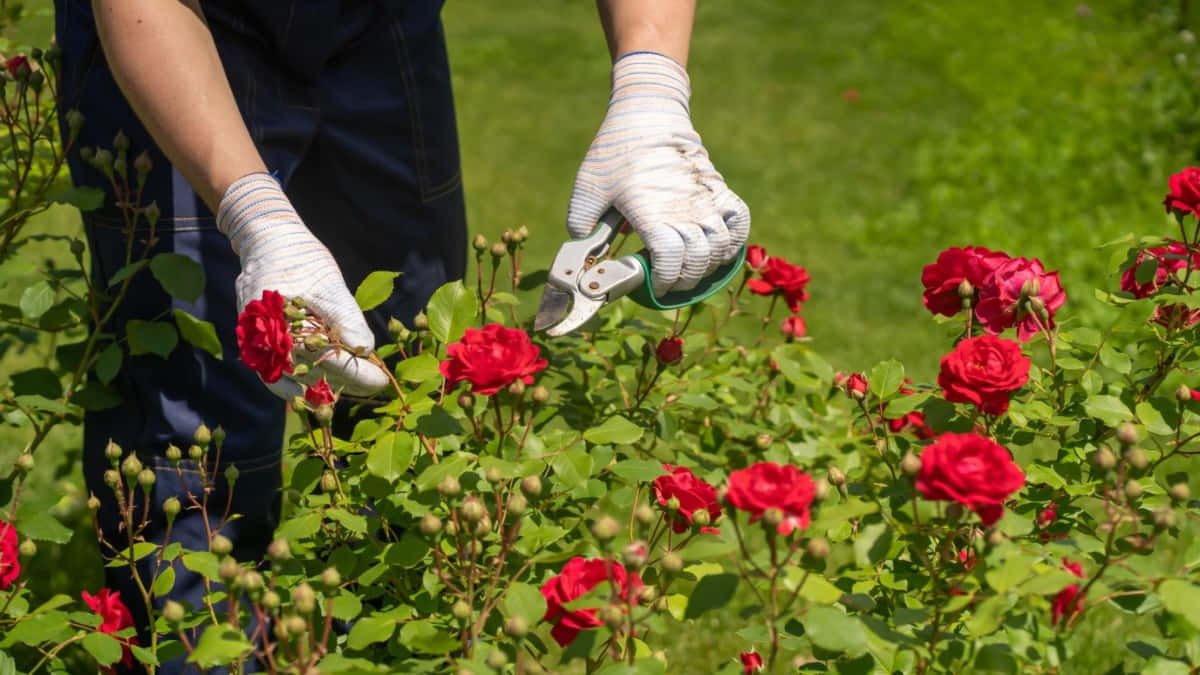
- Use clean, sharp pruning tools.
- Remove dead, diseased, or damaged stems.
- Identify the rose type before making major cuts.
- Remove weak or crossing growth where appropriate to improve the plant’s structure and airflow.
- Make cuts according to the recommended method for that type of rose.
- Dispose of diseased material responsibly and clean tools when disease transmission is a concern.
How pruning differs by rose type
| Rose type | General pruning approach |
|---|---|
| Hybrid tea | Often benefits from structured pruning to encourage strong flowering shoots |
| Floribunda | Usually shaped to maintain a balanced plant with productive flowering growth |
| Shrub rose | Pruning varies widely; some need only light shaping and removal of old or damaged stems |
| Climbing rose | Train main canes along the support and prune side shoots according to cultivar and flowering habit |
| Rambling rose | Often requires management of long canes, with timing depending on whether it flowers once or repeatedly |
| Miniature rose | Usually needs light shaping and removal of dead or weak growth |
Do not prune every rose in the same way. Some climbing and rambling roses flower on older wood, so pruning at the wrong time can remove developing flower buds.
Deadheading roses
Deadheading means removing faded flowers. On many repeat-flowering roses, it can encourage additional blooms and improve appearance. However, some gardeners prefer to leave flowers to form rose hips, which can provide ornamental interest and food for wildlife.
9. Seasonal rose care
Rose care should follow local weather and the plant’s growth cycle rather than a universal calendar.
Spring
- Inspect plants for winter damage.
- Prune rose types that should be pruned at this time in your region.
- Apply suitable fertilizer when active growth begins, if needed.
- Refresh mulch and check soil moisture.
- Watch new growth for aphids and disease symptoms.
Summer
- Monitor watering during hot or dry spells.
- Check leaves for black spot, powdery mildew, and pests.
- Deadhead repeat-flowering roses if desired.
- Avoid unnecessary pruning during severe heat.
- Provide support for climbing roses and heavy flowering canes.
Autumn or fall
- Remove fallen diseased leaves.
- Reduce feeding according to local recommendations and the plant’s growth cycle.
- Avoid unnecessary hard pruning where it could encourage vulnerable new growth before cold weather.
- Check whether your roses need winter protection.
Winter or the cool season
- Protect susceptible roses when freezing weather threatens.
- Check container plants during dry periods.
- Avoid working waterlogged or frozen soil.
- Clean and store garden tools.
- Plan pruning and planting for the next suitable season.
In tropical and subtropical regions, rose growth may respond more to wet and dry seasons or hot and cooler periods than to four traditional seasons. Use local rose-growing guidance for timing.
10. Grow roses successfully in containers
Container gardening is a practical option if you have a balcony, patio, courtyard, or small garden. Compact shrub roses, patio roses, and miniature roses may be suitable choices, provided their light and root-space requirements can be met.
Container rose care tips
- Choose a suitable pot. Select a container large enough for the mature plant and its roots.
- Provide drainage. Use a pot with drainage holes and a suitable container-growing medium.
- Place the pot carefully. Most roses need plenty of light, but the ideal position depends on the cultivar and local heat.
- Monitor moisture. Containers dry out more quickly than many garden beds, particularly during hot, windy weather.
- Feed appropriately. Follow the instructions for a suitable container-plant fertilizer.
- Repot when needed. If roots become crowded or the growing medium deteriorates, consider moving the rose to a larger container or refreshing the medium.
Do not use a pot simply because it looks attractive. A container that is too small or poorly drained can make watering and root health difficult to manage.
11. Identify and manage common rose pests and diseases
Regular inspection is one of the most effective ways to catch rose problems early. Examine new growth, leaf undersides, buds, and stems for discoloration, sticky residue, holes, or unusual spots.
Common problems include aphids, black spot, powdery mildew, and other leaf diseases. However, not every yellow leaf or damaged flower is caused by a pest or pathogen; poor drainage, heat, drought, and incorrect pruning can produce similar symptoms.
Aphids on roses
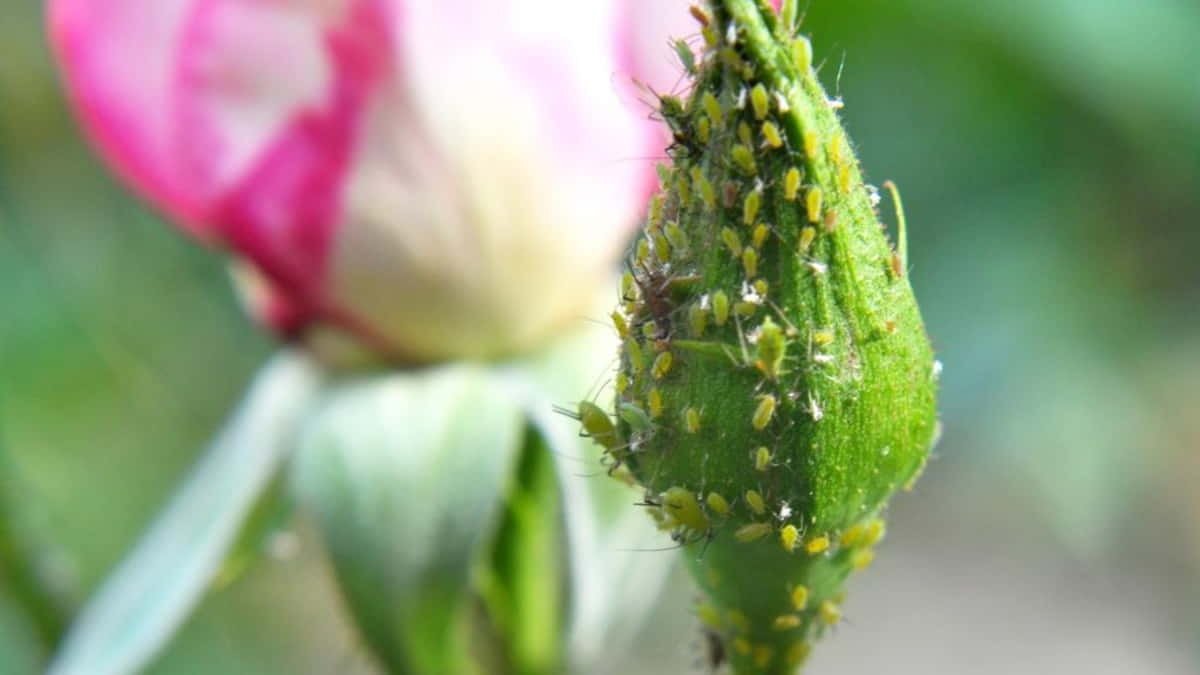
Aphids are small insects that often cluster on tender shoots and buds. They feed on plant sap and may cause distorted growth or sticky residue.
What to do:
- Inspect new shoots and the undersides of leaves.
- For a manageable infestation, dislodge aphids with a controlled stream of water where practical.
- Preserve natural predators, such as lady beetles and lacewings.
- Monitor the plant and repeat low-impact measures if needed.
- If treatment is necessary, select a product labeled for the pest and rose, and follow all directions.
Avoid spraying every insect you see. Some insects on roses are beneficial predators, and unnecessary broad-spectrum pesticide use can disrupt natural pest control.
Black spot on roses
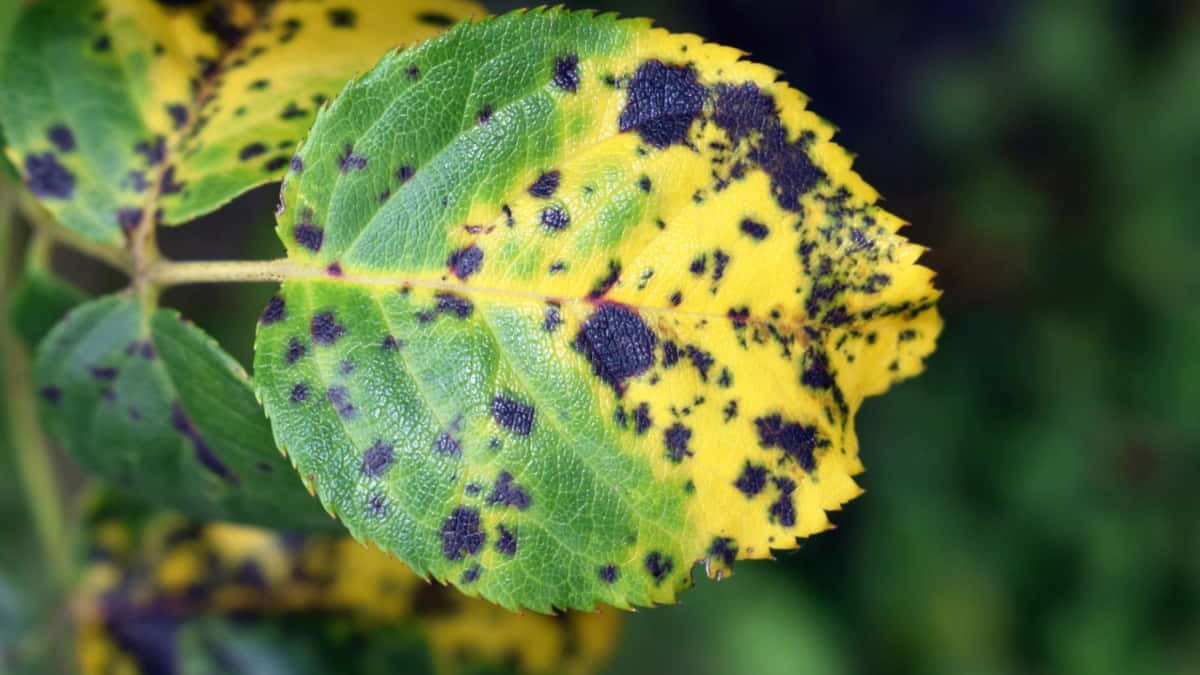
Black spot is a fungal disease associated with dark leaf lesions, often followed by yellowing and premature leaf drop. Its severity depends on the rose cultivar and environmental conditions. Moist foliage and splashing water can contribute to disease spread.
To help manage black spot:
- Choose cultivars with good local disease resistance.
- Space plants to allow air circulation.
- Water near the soil rather than routinely wetting the foliage.
- Remove fallen infected leaves and diseased material.
- Avoid unnecessary overhead watering, especially late in the day.
- If disease persists, consult a local extension service about suitable, currently labeled treatments.
Do not assume that a rose resistant to one leaf disease is resistant to all diseases.
Powdery mildew
Powdery mildew can appear as a pale, powder-like growth on leaves and sometimes buds. Infected leaves may become distorted or discolored. Conditions that favor the disease differ from those that favor some other fungal problems, so correct identification matters.
Improve plant spacing, monitor new growth, and choose varieties suited to your climate. If symptoms continue to spread, use a reliable local plant diagnostic resource to confirm the problem before applying treatment.
Diagnose the problem before treating it
| Symptom | Possible cause | Recommended first step |
|---|---|---|
| Sticky shoots with clusters of insects | Aphids | Inspect new growth and try a low-impact control |
| Dark spots with yellowing leaves | Black spot or another leaf disease | Remove affected fallen foliage and check moisture and airflow |
| White powdery growth | Powdery mildew | Confirm symptoms and improve suitable growing conditions |
| Yellow leaves with wet soil | Poor drainage or excess water | Check root-zone moisture and drainage |
| Brown leaf edges during hot weather | Heat or moisture stress, among other causes | Review exposure, soil moisture, and fertilizer use |
| Few flowers | Insufficient light, pruning errors, plant immaturity, or excessive fertilizer | Check the cultivar’s care requirements |
These are diagnostic clues, not definitive diagnoses. When symptoms are severe or persistent, a local university extension service or plant clinic can help identify the cause.
12. Propagate roses
Propagating roses allows gardeners to produce new plants, but success depends on the rose type, technique, timing, and growing conditions.
Growing roses from cuttings
Some roses can be propagated from stem cuttings. The process generally involves taking suitable healthy material, preparing it according to the recommended method, and keeping the cutting in an appropriate rooting medium while it develops roots. The required humidity, temperature, and timing vary.
The Royal Horticultural Society provides rose-specific propagation guidance and identifies cuttings as one way to produce new plants.
General steps include:
- Choose a healthy parent plant.
- Take suitable cuttings with clean tools at the recommended stage of growth.
- Remove or trim leaves as directed by a reliable propagation guide.
- Place the cuttings in a suitable, clean rooting medium.
- Maintain appropriate moisture, temperature, and light.
- Wait for root development before gradually acclimating the new plant.
Not all cuttings root successfully. Some named garden roses are protected by plant breeders’ rights or similar laws, so check local rules before propagating or distributing protected varieties commercially.
For grafted roses, a cutting may not reproduce the same rootstock characteristics as the original plant. If you want a particular cultivar with predictable growth and flowering, buying a healthy, correctly labeled plant from a reputable nursery may be the more reliable choice.
13. Common rose-growing mistakes to avoid
Even well-intentioned care can cause problems if it does not match the plant’s requirements.
Planting in too much shade. Many roses flower best with substantial direct sunlight. Check the cultivar’s needs before choosing a location.
Overwatering poorly drained soil. Waterlogged roots may decline even when the soil looks moist and the leaves appear wilted.
Ignoring plant spacing. Crowded foliage dries more slowly and can create conditions favorable to certain diseases.
Applying fertilizer without a reason. Excess nutrients can produce unbalanced growth or damage roots. Base fertilizer use on plant needs, soil conditions, and product directions.
Pruning every rose the same way. Climbers, ramblers, shrub roses, and hybrid tea roses can have different pruning requirements.
Treating every leaf problem with pesticide. Many plant symptoms arise from environmental stress, nutrient issues, or disease rather than insects.
Ignoring local climate. Advice written for one region may give the wrong planting or pruning date for another.
Expecting continuous flowers from every rose. Some roses flower in a single main flush, while others repeat-flower when conditions are suitable.
The most reliable approach is to identify your rose variety, learn its needs, and make changes based on what you observe.
Conclusion
Growing beautiful roses starts with understanding the needs of the variety you choose. Provide adequate sunlight, suitable soil and drainage, appropriate watering, and enough space for air to move around the foliage. Prune according to the rose’s growth habit, and inspect leaves and stems regularly so you can identify problems early.
For beginners, a locally suitable, disease-resistant rose can make care easier. For experienced gardeners, experimenting with climbing roses, fragrant varieties, or container-grown roses can bring new interest to the garden.
The best rose-care routine is one that adapts to your specific plant, soil, and climate. Observe your roses, make thoughtful adjustments, and use reliable horticultural guidance whenever you encounter a problem.
Frequently asked questions about roses
1. How much sunlight do roses need?
Many roses grow best with about six hours or more of direct sunlight daily, although some varieties tolerate partial shade. Check the cultivar’s requirements and consider intense afternoon heat in hot climates.
2. How often should roses be watered?
Water according to soil moisture, weather, plant age, and growing conditions. Newly planted roses and container roses often need more frequent checks than established plants in garden beds. Water thoroughly when needed without keeping the roots waterlogged.
3. What is the best soil for roses?
Roses generally prefer fertile, well-drained soil that retains enough moisture for healthy root growth. Test soil pH and nutrients when needed, and use appropriate amendments rather than changing the soil without evidence of a problem.
4. When should rose bushes be pruned?
The best time depends on the rose type and climate. Many bush roses are pruned in late winter or early spring in temperate climates, while climbing and rambling roses may need different timing. Follow local, cultivar-specific guidance.
5. How can I prevent black spot on roses?
Choose resistant cultivars, provide good air circulation, water near the soil, and remove infected fallen leaves. If the disease persists, consult local horticultural guidance about suitable treatments.
6. Can roses grow in pots?
Yes. Compact shrub roses, patio roses, and miniature roses can grow in containers when they have adequate root space, drainage, sunlight, and nutrients. Monitor moisture carefully because containers can dry out quickly in hot weather.
7. Which roses are easiest for beginners?
Locally adapted shrub roses and disease-resistant varieties can be good starting points. Look for plants suited to your climate and garden size, with manageable pruning requirements and resistance to common local diseases.
8. Why are my rose leaves turning yellow?
Possible causes include overwatering, drought, nutrient problems, disease, pests, or normal leaf aging. Check soil moisture, drainage, the pattern of yellowing, and other symptoms before choosing a treatment.