Sunflowers are popular flowering plants known for their bright blooms, distinctive centers, and impressive range of sizes. They can brighten a garden, attract pollinators, produce edible seeds, and grow successfully in many home gardens when given suitable conditions.
Sunflowers generally grow best in a sunny location with well-drained soil and warm weather. Most gardeners plant sunflower seeds directly outdoors after the risk of frost has passed. Depending on the variety and growing conditions, sunflowers may begin flowering in approximately 70–120 days after planting.
Whether you want towering garden flowers, compact plants for containers, or sunflowers for cutting and arranging, choosing the right variety makes growing them easier.
This guide explains what sunflowers are, the different types and colors available, their symbolism, and how to plant and care for them at home.
What Is a Sunflower?
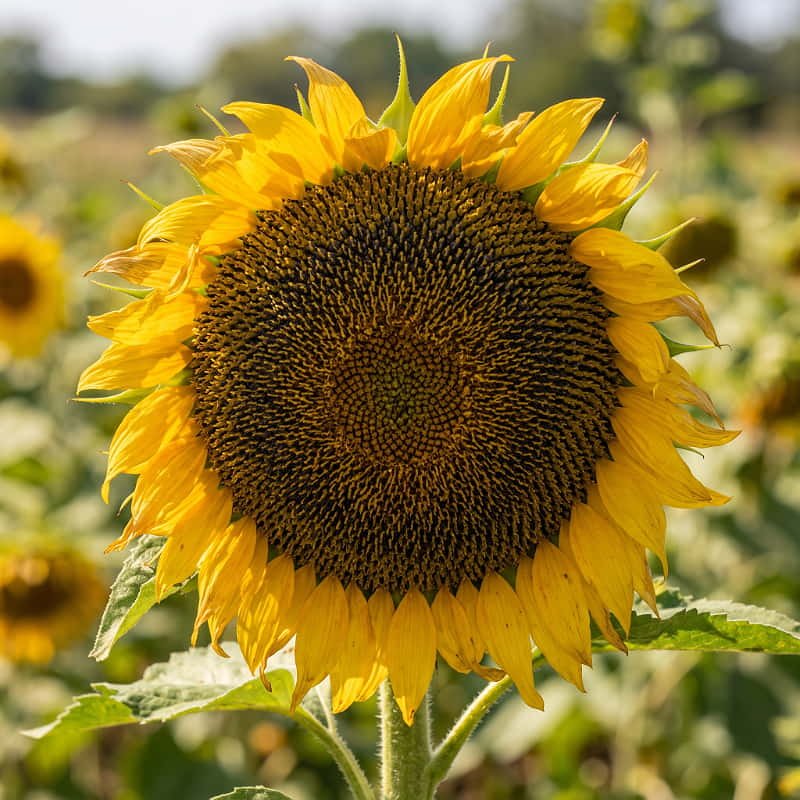
A sunflower is a flowering plant in the genus Helianthus, belonging to the daisy family, Asteraceae. The common garden and agricultural sunflower is known scientifically as Helianthus annuus.
Sunflowers typically have sturdy stems, broad leaves, and flower heads surrounded by colorful outer florets. Although a sunflower head looks like one large flower, it is actually a cluster of many individual flowers arranged together.
The outer florets are often yellow, orange, or reddish-brown, while the central disk contains numerous small florets. After pollination, many of these central florets can develop into fruits commonly called sunflower seeds.
Sunflowers are grown for several purposes, including:
- Ornamental gardening: Adding height and bright color to flower beds.
- Cut flowers: Providing cheerful blooms for bouquets and floral arrangements.
- Seed production: Producing seeds for food and bird feeding.
- Oil production: Supplying seeds used to manufacture sunflower oil.
- Wildlife support: Offering pollen and nectar to visiting insects, while mature seeds can provide food for birds and other wildlife.
The plant’s combination of beauty and usefulness has made it an important garden flower and agricultural crop.
Scientific Name and Characteristics of Sunflowers
The scientific name of the common sunflower is Helianthus annuus.
The name Helianthus comes from Greek words associated with the sun and flowers, while annuus refers to its annual life cycle.
Here are the main characteristics of common sunflowers.
| Characteristic | Description |
|---|---|
| Scientific name | Helianthus annuus |
| Plant family | Asteraceae |
| Life cycle | Usually annual for the common garden sunflower |
| Flowers | Flower heads containing many individual florets |
| Leaves | Generally broad, green, and often rough-textured |
| Stems | Upright, sturdy stems that vary in height by variety |
| Flower colors | Yellow, gold, orange, red, bronze, and cream in cultivated varieties |
| Growing conditions | Warm weather, ample sunlight, and well-drained soil |
| Common uses | Ornamental gardening, cut flowers, seeds, and oil production |
Do sunflowers always face the sun?
Not exactly.
Young sunflower buds can track the sun across the sky as they develop. Once the flower heads mature, however, they generally face east rather than continuing to follow the sun throughout the day.
This distinction corrects a common misconception about mature sunflowers.
History and Origin of Sunflowers
Sunflowers have a long history of cultivation in North America.
Archaeological and botanical research indicates that Indigenous peoples domesticated sunflowers thousands of years ago. They selected plants with useful characteristics, including larger seeds, which helped transform wild sunflowers into valuable food crops.
Sunflowers were later introduced to Europe during the sixteenth century. Over time, they became popular both as ornamental plants and as agricultural crops. Breeding efforts in Russia helped develop varieties suited to commercial seed and oil production.
Today, sunflowers are grown worldwide. Some varieties are bred primarily for attractive flowers, while others are selected for seed yield, oil production, or particular growth habits.
Their history demonstrates how one plant can serve as both a decorative garden favorite and an important food crop.
Different Types of Sunflowers
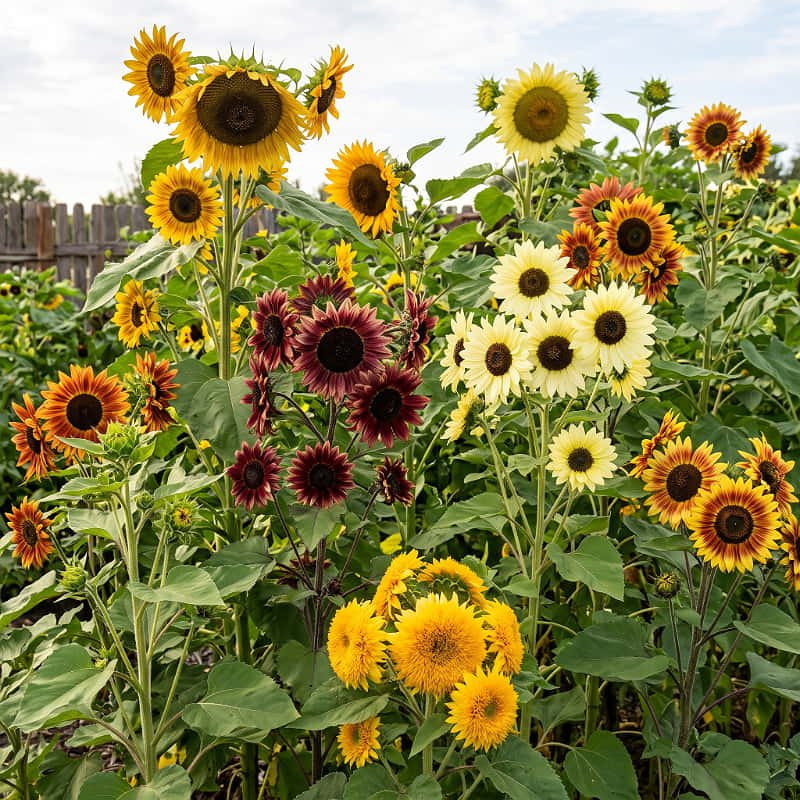
Sunflowers come in many shapes, colors, and sizes. Some produce one large flower on a tall stem, while others branch out and produce multiple blooms.
The best sunflower variety depends on your available space, desired flower color, and intended use.
1. Giant Sunflowers
Giant sunflowers are grown for their impressive height and large flower heads.
Under suitable conditions, some varieties can grow well over 8 feet tall, with certain cultivars reaching considerably greater heights.
Best for:
- Large gardens
- Garden borders where height is desirable
- Seed production
- Gardening competitions
- Dramatic seasonal displays
Giant sunflowers need enough room for their roots and stems to develop. Their height and heavy flower heads can also make them vulnerable to strong winds.
Choose a sheltered location and provide support when necessary.
2. Dwarf Sunflowers
Dwarf sunflowers are compact varieties that work well in smaller spaces.
Many dwarf cultivars grow to around 1–3 feet tall, although the exact height depends on the variety.
They are particularly useful for balconies, patios, containers, and the front of flower beds.
Best for:
- Small gardens
- Pots and planters
- Balcony gardening
- Beginners
- Low-growing flower displays
When selecting dwarf sunflowers, check the seed packet for the expected mature height and whether the plant branches.
3. Branching Sunflowers
Branching sunflowers develop several side stems and can produce multiple flower heads.
Unlike single-stem varieties, which typically produce one main flower head, branching types can provide a longer sequence of blooms.
They are useful for cut-flower gardens and informal flower beds.
Best for:
- Repeated flower harvesting
- Cottage-style gardens
- Pollinator-friendly planting
- Gardeners who want several blooms per plant
Allow branching varieties enough room to spread. Crowded plants may have poorer airflow and become harder to maintain.
4. Pollenless Sunflowers
Pollenless sunflowers are cultivated primarily for the cut-flower industry and decorative use.
They are popular for indoor arrangements because their flowers produce little or no pollen, reducing the yellow pollen that can fall onto nearby surfaces.
However, pollenless does not automatically mean that a flower is allergy-proof. People with sensitivities should consider their individual reactions.
Best for:
- Bouquets
- Floral arrangements
- Decorative garden planting
- Situations where loose pollen is undesirable
5. Ornamental Sunflowers
Ornamental sunflowers are selected for their appearance rather than solely for seed production.
They can have unusual petal arrangements, different flower colors, or attractive branching habits.
Depending on the cultivar, flowers may be yellow, orange, bronze, red, cream, or a combination of shades.
Best for:
- Decorative flower beds
- Cut-flower gardens
- Seasonal displays
- Mixed borders
Which sunflower variety should you choose?
| Your goal | Suitable sunflower type |
|---|---|
| Grow very tall flowers | Giant varieties |
| Decorate a balcony | Dwarf varieties |
| Harvest several flowers | Branching varieties |
| Arrange flowers indoors | Pollenless or suitable ornamental varieties |
| Produce seeds | Varieties specifically selected for seed production |
| Create a colorful garden | Ornamental varieties |
Tip: Always check the mature height, spacing requirements, and days to flowering listed by the seed supplier. Two sunflowers that look similar as seedlings may grow very differently.
Sunflower Colors and Their Meanings
Sunflowers are most commonly associated with bright yellow petals and dark central disks. However, cultivated varieties display a wider range of colors.
Sunflower colors are often assigned symbolic meanings in floral traditions, gift-giving, and popular culture. These associations are not universal rules; meanings vary by culture, context, and personal preference.
Yellow Sunflowers
Yellow sunflowers are commonly associated with happiness, warmth, optimism, and friendship.
Their bright appearance makes them a popular choice for summer bouquets, celebrations, and cheerful garden displays.
Orange Sunflowers
Orange varieties are often associated with energy, enthusiasm, creativity, and warmth.
They can add a vivid accent to mixed flower arrangements and autumn-inspired displays.
Red and Burgundy Sunflowers
Some ornamental cultivars have red, bronze, or burgundy petals.
These darker colors are often used to suggest richness, confidence, depth, or a dramatic aesthetic in floral arrangements. Their symbolism depends on the occasion and the sender’s intention.
Cream and Pale Yellow Sunflowers
Pale yellow and cream varieties offer a softer appearance than traditional bright-yellow sunflowers.
They can complement white flowers, pastel arrangements, and understated garden designs.
What Do Sunflowers Symbolize?
Sunflowers are frequently associated with:
- Happiness and positivity
- Loyalty and devotion
- Warmth and affection
- Hope and optimism
- Admiration and appreciation
These are common contemporary associations rather than fixed meanings shared by every culture.
If you are choosing sunflowers as a gift, consider the recipient, occasion, and message you want to communicate instead of relying on color alone.
When Is the Best Time to Plant Sunflowers?
The best time to plant sunflower seeds depends on local climate, frost risk, and soil temperature.
For many temperate climates, plant sunflower seeds outdoors after the last expected frost, when the soil has warmed sufficiently. A soil temperature of about 50°F (10°C) or warmer is a useful starting point, although variety recommendations and local conditions can differ.
Planting in cool climates
In areas with cold winters, sunflower seeds are usually sown in spring after frost danger has passed.
Planting too early in cold, wet soil may delay germination or cause seeds to rot.
Planting in warm climates
In regions with mild winters and hot summers, planting dates may differ substantially from those in temperate climates.
Sunflowers can often be planted when temperatures are suitable and extreme heat is not likely to stress young seedlings. In very hot regions, gardeners may need to avoid the harshest part of summer.
Planting sunflowers in Pakistan
For gardeners in Pakistan, planting time should be based on local weather rather than a fixed international calendar.
- Cooler northern and high-altitude areas: Spring planting after severe cold has passed may be suitable.
- Punjab and other hot plains: Consider planting during a locally suitable cooler growing period, avoiding conditions in which extreme heat could stress young plants.
- Warmer coastal areas: Use local agricultural or horticultural guidance to determine the best sowing window.
These are general regional considerations, not a verified district-by-district planting calendar. Check local temperatures and seed-packet guidance before sowing.
Can you plant sunflower seeds more than once?
Yes. Succession planting can extend the flowering season.
Instead of sowing every seed on the same day, plant additional batches at intervals of roughly two weeks, where the local season is long enough. This can help spread flowering across a longer period.
How to Grow Sunflowers at Home
Growing sunflowers from seed is straightforward when the plants receive enough sunlight, suitable soil, and adequate water.
Follow these steps to get started.
1. Choose the Right Sunflower Seeds
Begin by selecting a variety that suits your garden.
Consider:
- Mature plant height
- Flower size and color
- Single-stem or branching growth
- Container or ground planting
- Intended use, such as cut flowers or seed production
- Expected time to flowering
For small spaces, choose a dwarf variety. For large gardens, you can experiment with taller cultivars.
Buy seeds from a reliable supplier and follow the instructions printed on the packet.
2. Select a Sunny Location
Sunflowers generally perform best in full sun.
Choose a spot that receives at least 6–8 hours of direct sunlight per day, preferably with enough room for the selected variety to reach its mature size.
Avoid locations where water collects after rain or irrigation.
For tall varieties, consider wind exposure. A sheltered area can reduce the risk of stems bending or falling over.
3. Prepare the Soil
Sunflowers grow best in well-drained soil.
Before planting:
- Remove weeds and large stones.
- Loosen compacted soil.
- Mix in mature compost if the soil needs improvement.
- Check that excess water can drain away.
- Level the surface before sowing.
Avoid planting in soil that stays waterlogged.
Sunflowers can grow in different soil types, but improving drainage and soil structure gives young roots a better environment.
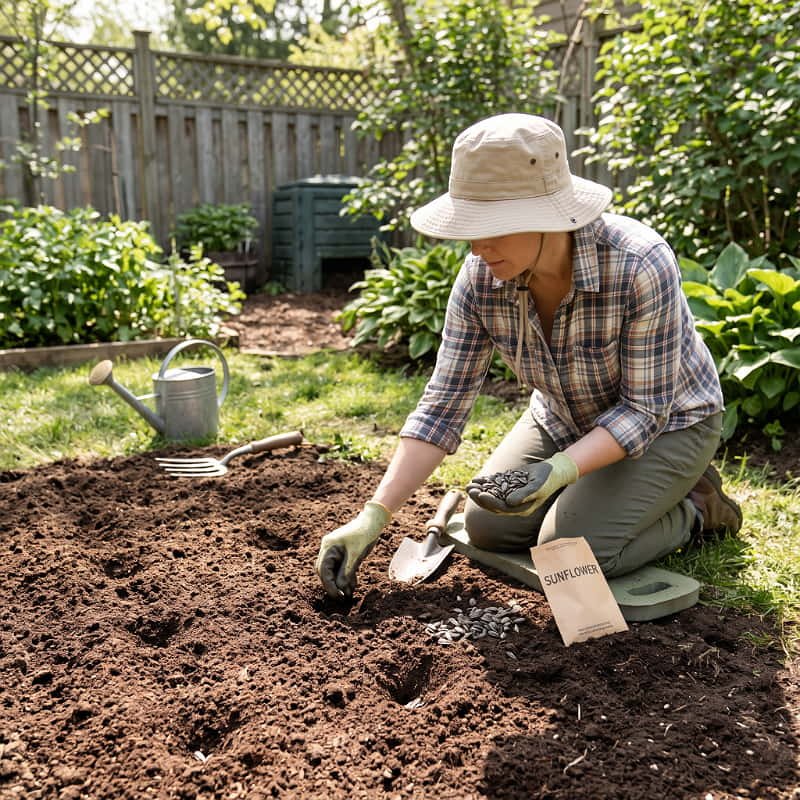
4. Plant the Sunflower Seeds
Direct sowing is often the simplest method because sunflowers develop roots quickly and can be sensitive to unnecessary disturbance during transplanting.
A practical planting method is:
- Wait until the soil has warmed and frost risk has passed.
- Make holes approximately 1 inch (2.5 cm) deep, adjusting to the seed supplier’s directions.
- Space seeds according to the selected variety.
- Place a seed in each hole.
- Cover lightly with soil.
- Water gently to moisten the planting area.
As a general starting point, smaller single-stem varieties may be planted closer together than large or branching varieties. Tall and giant types need more space.
University extension guidance commonly recommends sowing seeds about 1 inch deep, with spacing adjusted to plant size and growth habit.
5. Water the Seeds and Seedlings
Keep the soil consistently moist while the seeds germinate, but do not leave it saturated.
Once seedlings emerge, water according to weather, soil drainage, and plant development.
Useful practices include:
- Watering at the base of the plant.
- Checking the soil before watering again.
- Providing more frequent checks during hot, dry weather.
- Avoiding constant saturation around the roots.
Young sunflowers benefit from reliable moisture while establishing their root systems. Established plants can tolerate some dry conditions, but regular watering helps support healthy growth and flowering.
6. Thin the Seedlings if Necessary
If several seeds germinate too close together, the plants may compete for light, water, and nutrients.
Once the seedlings are established, thin them to the spacing recommended for the variety.
Choose the healthiest seedlings to keep, and remove unwanted ones carefully to avoid disturbing nearby roots.
Thinning is particularly important when growing tall or branching sunflowers.
7. Fertilize When Needed
Sunflowers do not always need heavy feeding, especially when the soil is fertile.
If the soil is poor, incorporate mature compost before planting or use a balanced fertilizer according to the label.
Avoid excessive nitrogen. Too much nitrogen can encourage leafy growth at the expense of flowering, depending on the growing conditions and fertilizer formulation.
A soil test is useful when you are unsure which nutrients your garden needs.
8. Support Tall Plants
Large sunflower heads can become heavy, and tall stems may bend in strong winds.
To reduce damage:
- Plant tall varieties in a reasonably sheltered position.
- Install a stake early if the variety needs support.
- Tie stems loosely to stakes as they grow.
- Avoid placing stakes so close that they damage the roots.
Smaller dwarf varieties generally need less support, although their requirements still depend on wind exposure and flower size.
How to Care for Sunflowers
Good sunflower care involves balancing sunlight, moisture, nutrition, and space.
Sunlight
Provide a sunny location with at least six hours of direct sunlight daily. More sun is often beneficial when the climate and soil conditions are suitable.
Too much shade can produce weaker growth and fewer or smaller flowers.
Watering
Water deeply enough to moisten the root zone rather than repeatedly wetting only the soil surface.
Check soil moisture before watering. Sandy soil dries more quickly than heavier soil, while containers may need more frequent attention during hot weather.
There is no single watering schedule that suits every sunflower. Adjust according to rainfall, temperature, soil type, container size, and plant maturity.
Soil and Drainage
Keep the soil loose enough for roots to develop and ensure excess water can escape.
If your garden has heavy soil, adding organic matter and improving drainage can help. In containers, use a suitable potting mix rather than dense garden soil alone.
Weed Control
Weeds compete with sunflowers for water, nutrients, and light.
Remove weeds around young plants and consider applying a thin layer of mulch. Keep mulch away from direct contact with the stem to reduce the risk of excess moisture collecting around the plant base.
Pest and Disease Monitoring
Inspect leaves, stems, and flower heads regularly.
Look for:
- Holes or irregular leaf damage
- Yellowing or spotted leaves
- Wilting despite moist soil
- Broken stems
- Damaged or missing seeds
Correctly identify the cause before applying any treatment. Insect damage, water stress, and fungal diseases can sometimes produce similar symptoms.
Deadheading and Flower Harvesting
If you want to encourage a tidier ornamental display, remove spent flowers when appropriate for the variety.
However, do not remove flower heads you intend to harvest for seeds.
For cut flowers, harvest at the stage recommended for the cultivar and place the stems in water promptly. Cutting during the cooler part of the day can help reduce wilting.
How Long Do Sunflowers Take to Grow?
The time from planting to flowering depends on variety, weather, and growing conditions.
Many common sunflower varieties flower approximately 70–120 days after planting, although some cultivars mature more quickly or take longer.
Here is a general growth timeline.
| Growth stage | What happens |
|---|---|
| Germination | The seed absorbs water and begins to sprout |
| Seedling stage | The first leaves appear and roots begin developing |
| Vegetative growth | The plant develops additional leaves and increases in height |
| Bud formation | A flower bud becomes visible at the growing tip |
| Flowering | The flower head opens and attracts visiting insects |
| Seed development | Fertilized florets may develop into mature seeds |
These stages do not occur on an identical schedule for every variety.
Warm conditions, adequate sunlight, suitable soil, and appropriate watering can help plants develop well. Cold soil, poor drainage, shade, and other stresses may delay growth.
How long do sunflower blooms last?
An individual sunflower bloom often remains attractive for several days to around two weeks, depending on the variety and weather. The overall flowering period of a planting may last much longer, especially when branching varieties or successive sowings are used.
Hot weather, wind, and moisture stress can shorten the attractive life of a bloom.
How Tall Do Sunflowers Grow?
Sunflower height varies widely by cultivar.
Some dwarf varieties remain around 1–3 feet tall, while medium-sized varieties may reach several feet. Giant cultivars can grow much taller under suitable conditions.
| Sunflower category | Approximate height |
|---|---|
| Dwarf | Around 1–3 feet |
| Medium | Around 3–6 feet |
| Tall | Around 6–10 feet |
| Giant | Often over 8 feet, with some varieties growing considerably taller |
These ranges are approximate, not strict botanical categories. Always check the specific variety’s expected mature height.
Plant height can be affected by sunlight, nutrition, water availability, spacing, and weather. A variety’s maximum advertised height should not be treated as a guaranteed result.
Can Sunflowers Grow in Pots?
Yes. Sunflowers can grow in containers, particularly dwarf and compact varieties.
Container gardening is useful when you have a balcony, patio, courtyard, or small outdoor space.
Choose a suitable variety
Select a dwarf or compact sunflower with a mature height appropriate for your container.
Very tall varieties can become top-heavy and may need more root space and support than a typical pot can provide.
Choose the right container
Use a sturdy pot with drainage holes. The container should be large enough for the plant’s root system and expected mature size.
Larger varieties generally require larger containers than compact types. Check the seed supplier’s recommendations where available.
Use suitable potting mix
Fill the container with a quality potting mix that drains well but retains enough moisture for plant growth.
Avoid dense soil that remains saturated for long periods.
Place the pot in sunlight
Position the container where it receives at least six hours of direct sunlight daily.
Rotate the pot if necessary to improve the plant’s overall exposure, but avoid moving it so frequently that it becomes difficult to manage.
Water consistently
Container soil can dry out faster than garden soil, especially during hot weather.
Check moisture regularly and water when needed. Do not let excess water remain trapped in a saucer beneath the pot.
Prevent the plant from tipping over
Choose a stable container and shelter tall plants from strong winds. Support may be necessary for varieties with large flower heads.
Best choice for beginners: Start with a compact sunflower variety, a well-draining pot, and a sunny position.
Common Sunflower Growing Problems
Sunflowers are generally straightforward to grow, but several problems can affect their appearance and development.
| Problem | Possible cause | Practical solution |
|---|---|---|
| Poor germination | Cold soil, old seeds, or excessive moisture | Use fresh seeds, plant in suitably warm soil, and avoid waterlogging |
| Yellow leaves | Water stress, nutrient problems, or root damage | Check soil moisture, drainage, and growing conditions |
| Weak, leaning stems | Insufficient light, wind, or heavy flower heads | Provide adequate sunlight and support tall plants |
| Few or small flowers | Shade, unsuitable variety, overcrowding, or stress | Improve sunlight, spacing, and care |
| Wilting | Dry soil, waterlogged roots, or disease | Check soil moisture and inspect the plant before watering |
| Damaged leaves | Insects, slugs, or other feeding animals | Identify the cause and choose an appropriate control method |
| Rotting roots or stem base | Persistently wet soil or disease | Improve drainage and avoid excessive watering |
| Missing seeds | Birds or other wildlife feeding on mature heads | Use suitable protective netting if seed harvest is the priority |
Why are my sunflowers not flowering?
If a sunflower produces plenty of leaves but few flowers, consider whether it receives enough sunlight, has been given excessive nitrogen, or is growing under conditions unsuitable for its variety.
Check the expected time to flowering on the seed packet before assuming something is wrong.
Why are my sunflowers falling over?
Tall plants may lean or break because of wind, saturated soil, shallow rooting, or heavy flower heads.
Support vulnerable plants, avoid waterlogged soil, and choose a sheltered position when planting large varieties.
How can I protect sunflower seeds from birds?
If you are growing sunflowers for seed harvest, you may need to protect the developing flower heads as the seeds mature.
Use suitable, breathable protective netting that does not entangle birds or other wildlife. Make sure it is secure and inspect it regularly.
Benefits and Uses of Sunflowers
Sunflowers offer more than attractive flowers. Their uses range from garden decoration to food production and wildlife support.
1. Ornamental Gardening
Sunflowers bring height, color, and structure to flower beds.
They can be planted in rows, grouped in borders, or used as seasonal focal points. Compact varieties also work well in containers.
Combining different heights and colors can create a layered garden display.
2. Cut Flowers and Floral Arrangements
Many sunflower varieties are suitable for bouquets and indoor arrangements.
Single-stem varieties can provide a consistent flower shape, while branching types may offer several blooms per plant.
Choose a cultivar suited to cutting and harvest flowers at the stage recommended for that variety.
3. Sunflower Seeds for Food
Certain sunflower varieties produce seeds that can be eaten after appropriate harvesting and preparation.
Seed types differ in size, shell characteristics, and intended use, so choose a food or confectionery variety if edible seed production is your goal.
Follow appropriate food-safety practices when drying and storing harvested seeds.
4. Sunflower Oil
Sunflower seeds are an important source of edible vegetable oil.
Commercial oilseed varieties are selected for characteristics such as seed yield and oil content. These may differ from ornamental varieties grown primarily for their flowers.
5. Supporting Pollinators
Sunflower heads can attract bees and other insects that visit flowers for pollen or nectar.
If supporting pollinators is a priority, look for varieties that provide accessible pollen and choose planting arrangements that offer a succession of flowering plants.
Not every sunflower cultivar offers the same resources, so check the characteristics of the variety you intend to grow.
6. Feeding Birds and Wildlife
Mature sunflower seeds can provide food for birds and other wildlife.
If you want to collect seeds for yourself, protect selected flower heads as they mature. If wildlife support is the priority, leave some mature heads available for visiting animals.
Conclusion
Sunflowers are versatile flowering plants that can brighten gardens, provide cut flowers, produce seeds, and support visiting pollinators.
The best sunflower for your space depends on the variety you choose. Giant sunflowers suit larger gardens, while dwarf cultivars are often better for pots and compact spaces. Branching and ornamental varieties offer additional options for colorful displays and cut flowers.
To grow healthy sunflowers, choose a sunny location, prepare well-drained soil, plant at an appropriate time, and adjust watering to the weather and soil conditions. Give larger varieties enough room and support when needed.
With the right variety and basic care, sunflowers can be a rewarding choice for both beginner and experienced gardeners.
Frequently Asked Questions About Sunflowers
1. What is the scientific name of a sunflower?
The scientific name of the common sunflower is Helianthus annuus. It belongs to the Asteraceae family, which also includes daisies and other flowering plants.
2. When should you plant sunflower seeds?
Plant seeds after the risk of frost has passed and the soil has warmed sufficiently. In temperate regions, this is generally during spring or early summer. In warmer climates, the most suitable planting period may be different.
3. How long do sunflowers take to grow?
Many sunflower varieties flower in approximately 70–120 days after planting. Some cultivars mature faster or more slowly, so check the expected flowering time on the seed packet.
4. How much sunlight do sunflowers need?
Sunflowers generally need at least six hours of direct sunlight daily, with 6–8 hours being a useful target for many garden varieties. A sunny location supports healthy growth and flowering.
5. Can sunflowers grow in pots?
Yes. Dwarf and compact varieties are usually the easiest choices for container gardening. Use a sturdy pot with drainage holes, suitable potting mix, and enough space for the variety’s roots.
6. How often should you water sunflowers?
Water sunflower plants when the soil begins to dry, adjusting for temperature, rainfall, and soil drainage. Young seedlings need consistent moisture, while established plants can tolerate some dry conditions.
7. How tall can sunflowers grow?
Dwarf varieties may grow only 1–3 feet tall, while many standard and giant varieties grow several feet or more. Actual height depends on the cultivar and growing conditions.
8. Do sunflowers come back every year?
The common sunflower, Helianthus annuus, is an annual, meaning an individual plant completes its life cycle in one growing season. It may produce new plants from fallen seeds, but these are new seedlings rather than the original plant returning. Other species in the Helianthus genus are perennial.
9. What do sunflowers symbolize?
Sunflowers are commonly associated with happiness, positivity, warmth, loyalty, and admiration. These meanings are influenced by cultural traditions and personal interpretations, so they can vary.